Club Platform

Designing the Admin Around the Product Experience
Project type
Web platform
Year
2022- Ongoing
Client
Club.co
My role
Head of Design / Senior Product Designer / Business developer
Instead of building a traditional backend dashboard detached from the product experience, I introduced the idea of designing the platform directly around the brand page itself. From signup, brands instantly see a mobile-first preview that mirrors the real Club app experience, allowing them to immediately understand what they are building.
The goal was not simply to help brands manage a page, but to make them feel like they were already inside the product they were creating.
My Role
I led the product design and system thinking behind the Club Platform experience.
My biggest contribution was introducing the core platform direction: instead of designing a traditional backend dashboard detached from the product, I proposed that the home dashboard should feel like the actual brand page inside the Club app. This became the foundation of the entire platform experience.
I also introduced the modal-based workflow architecture, where all major actions — such as connecting e-commerce, configuring rewards, and managing affiliate systems — happened directly on top of the brand page instead of separate admin pages. This preserved context throughout the experience and made the platform feel product-native rather than operational.
Together with a design system designer, I designed roughly 95% of the platform and developed scalable interaction patterns for both lightweight actions and more complex multi-step flows and wizards.
I also led the UX structure for Club’s Wizard system, creating scalable onboarding and loyalty flows for customers, affiliates, ambassadors, and creators.
Another key contribution was introducing the market filter system during onboarding, allowing brands to separate followers from reward-eligible community members based on active market regions. This helped brands maintain broader reach while controlling reward distribution and incentive costs.
Problem
The original platform direction followed a traditional admin structure with disconnected dashboards, isolated settings pages, and backend-style workflows.
The problem was that brands never truly understood what they were building.
As users moved deeper into setup flows, they lost context. Content became abstract, settings felt technical, and the actual Club experience disappeared behind management UI.
There was a constant disconnect between the admin interface and the real product experience users would eventually see inside the app.
The platform optimized for management instead of understanding.
Insight
The key realization was that brands should build the experience while seeing the experience.
The brand page itself became the foundation of the platform, while every workflow happened in layers on top of it. Instead of navigating away into backend systems, brands could edit content, configure rewards, connect commerce, and manage settings while continuously seeing the real product underneath.
This preserved context across every workflow and created a much stronger connection between action and outcome.
The platform stopped behaving like an admin tool and started behaving like the product itself.
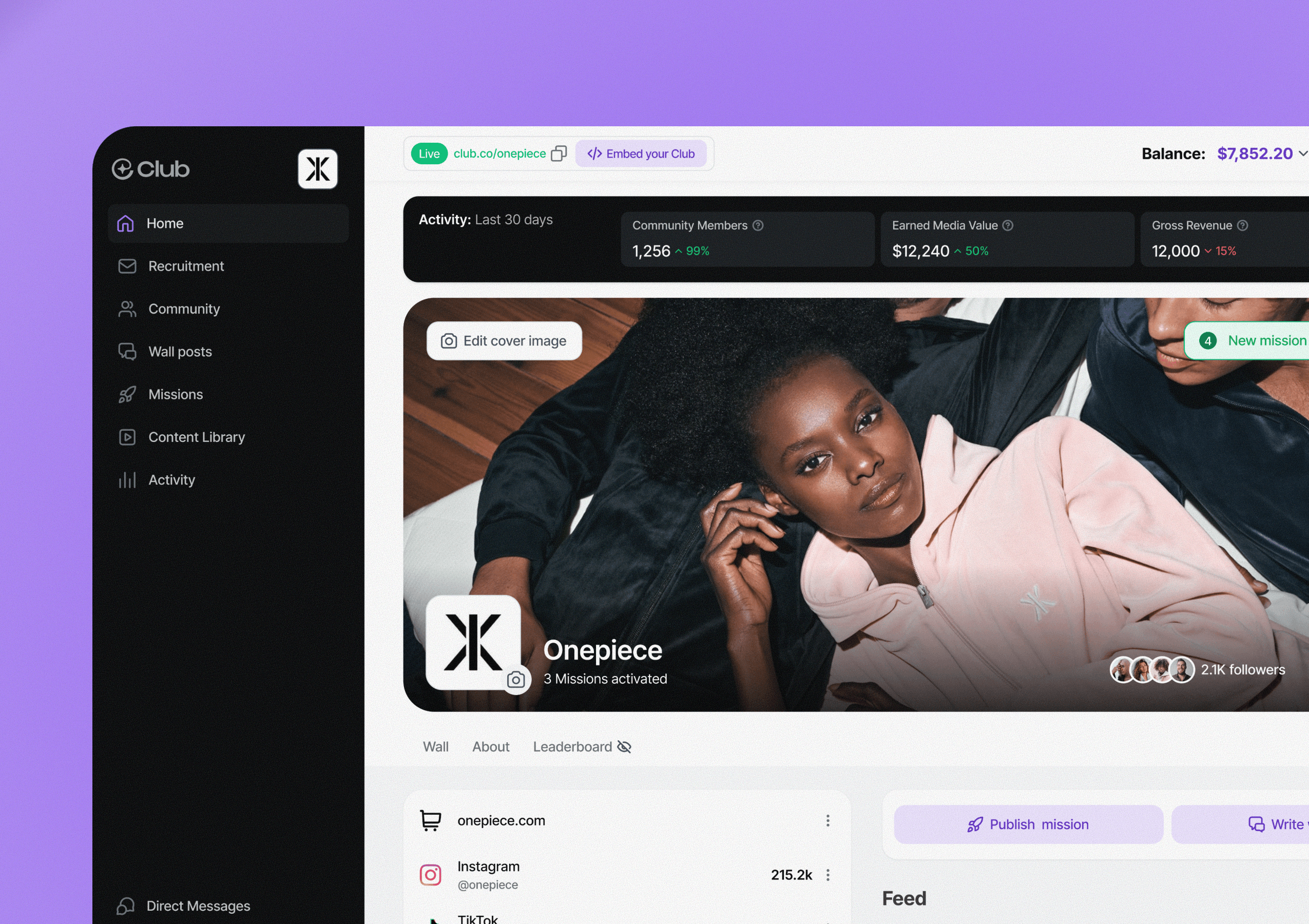


The Platform Entry
After being approved by Club team, brands landed directly on their own brand page in a desktop preview state before going live inside the Club app.
From there, they could start preparing for launch by:
connecting e-commerce
linking socials


Unlocking Community-Led Growth
Connecting e-commerce was one of the most important onboarding steps because it unlocked the core system behind community-led growth inside Club.
The platform supported major e-commerce providers such as Shopify, WooCommerce, Magento, Wix, Squarespace, and Centra, alongside custom integrations, allowing most brands to get started immediately.


Unlocked revenue generation
Once connected, brands could immediately start managing revenue and incentive tools directly inside Club, including affiliate revenue, sales tracking, gift card rewards, cash-to-store-credit conversion, free product campaigns, and sales challenge actions.
This transformed the platform from a simple brand page into a connected growth and monetization system.

Building on Top of the Product
One of my biggest contributions was introducing the idea that most platform flows should happen in modals layered directly on top of the brand page instead of navigating users into separate admin pages.
This preserved context throughout the entire experience and allowed brands to continuously see the product they were building while configuring rewards, connecting e-commerce, managing content, and setting up their community.
Rather than feeling like a disconnected backend tool, the platform felt like a live extension of the actual Club experience.

Ready to Launch
Once brands had connected their e-commerce, socials, rewards, and revenue systems, they were ready to launch their Club fan page inside the Club app.
At this point, the platform shifted from setup to activation. Brands could publish their page live to the Club audience and begin turning their community, content, and commerce systems into an active growth engine.


You Are Now Live
Once live, brands could share their Club URL to start growing followers and recruiting community members directly into their Club.
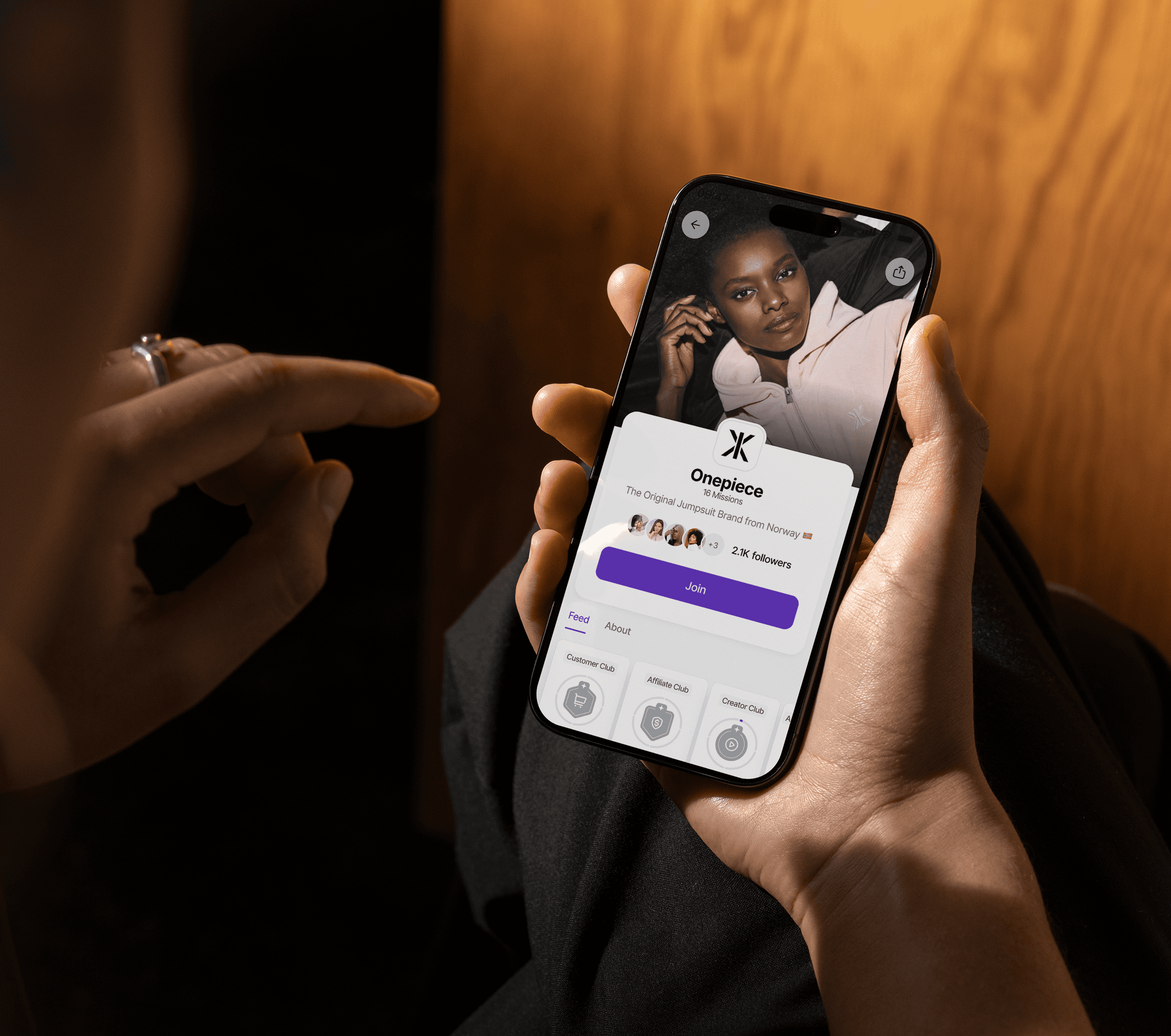
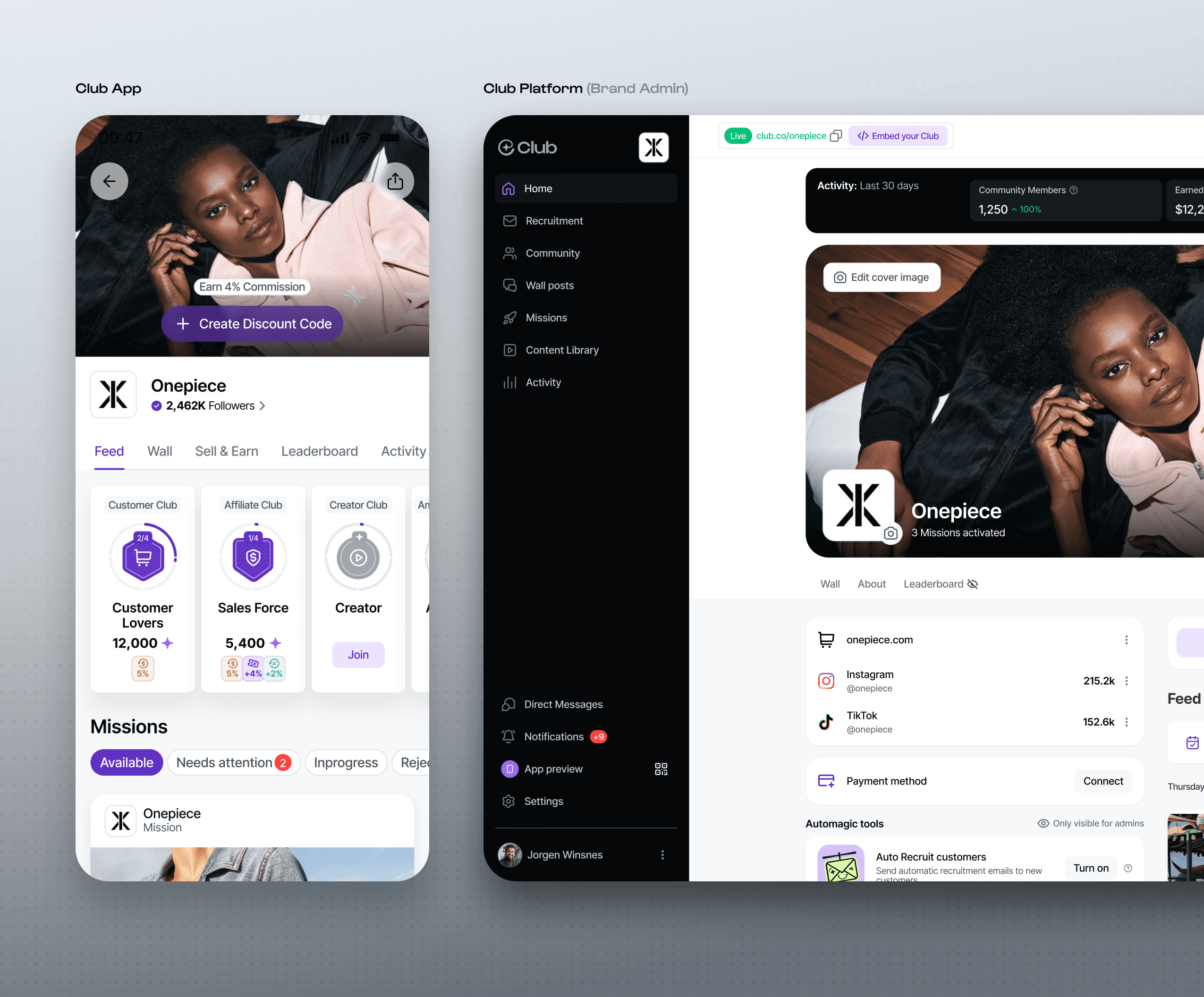
Users join your brand in Club app
At the same time, existing Club users could discover the brand directly inside the app as one of the newest live communities to join. From there, the platform shifted from setup to growth, allowing brands to activate their audience, community, and reward systems inside the Club ecosystem.

Designing the Growth Loop
The platform was designed around a repeatable engagement loop:
Brands create missions → members complete tasks → rewards are distributed → revenue and engagement increase → new campaigns are created.
This transformed community participation into an ongoing growth system rather than isolated marketing campaigns.
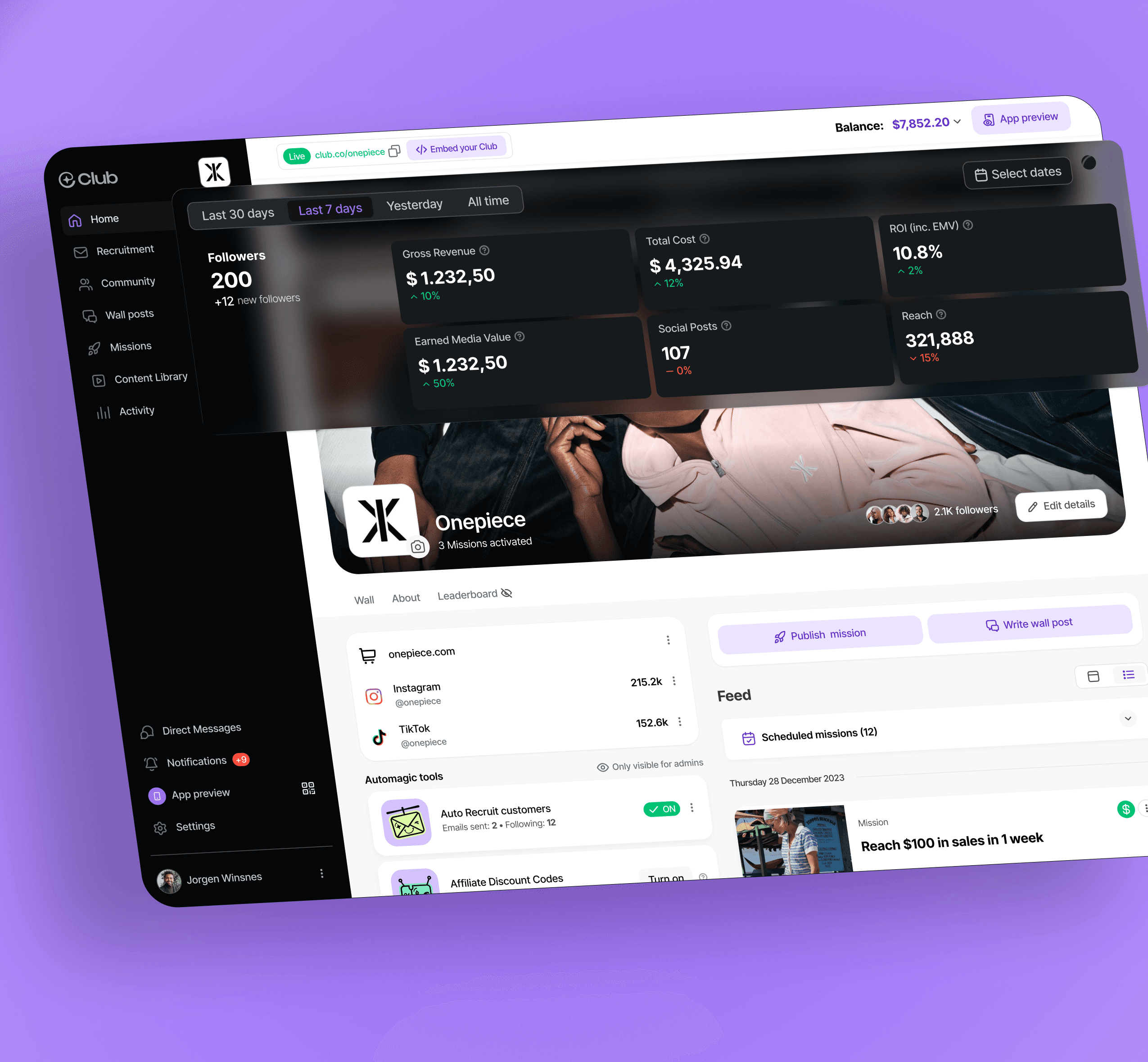
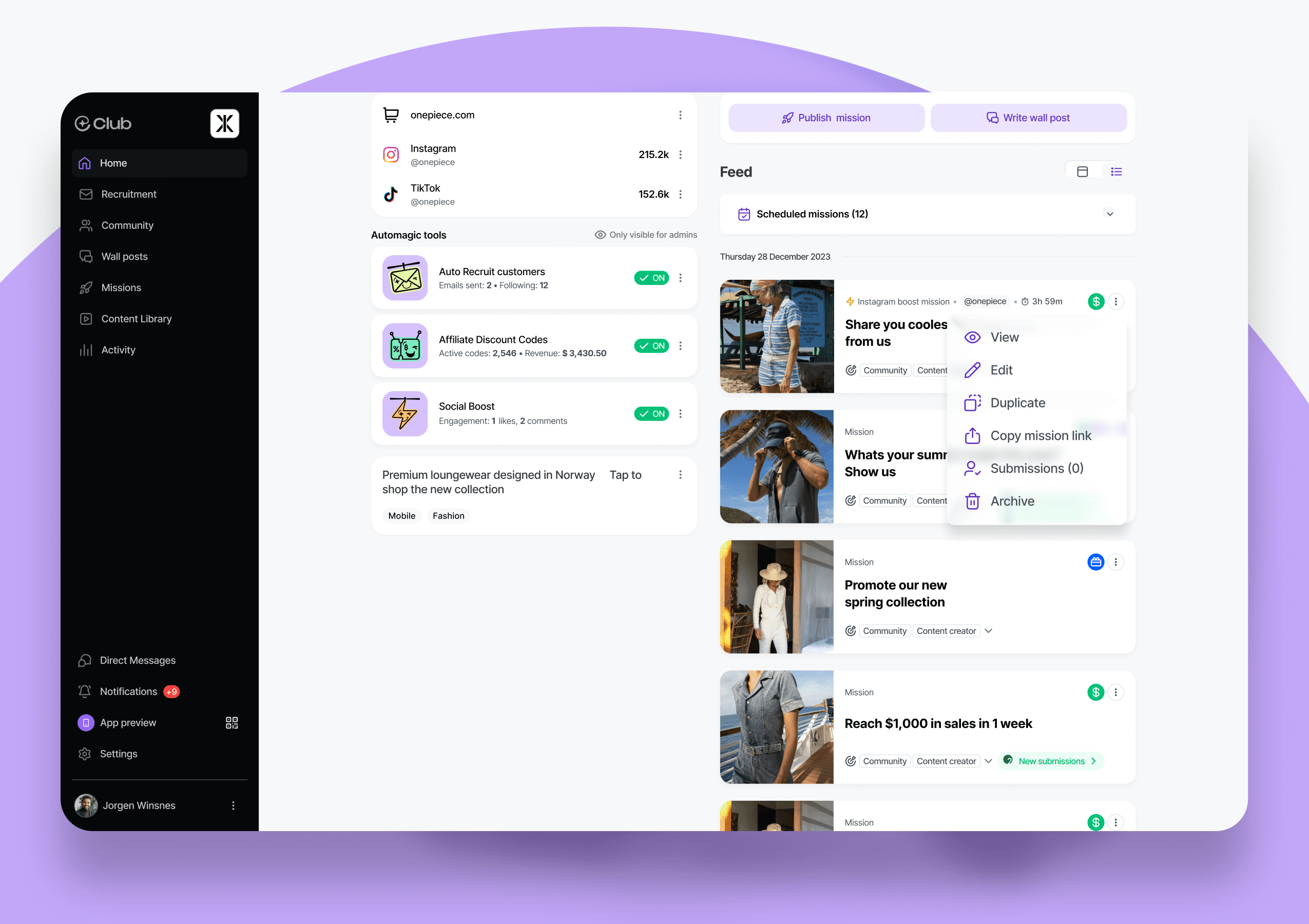
Community-Led Growth
Once live, the platform shifted from setup to growth. The brand start gaining new members, engagement, and revenue automatically through community activity, rewards, affiliate systems, and discovery inside the Club app.

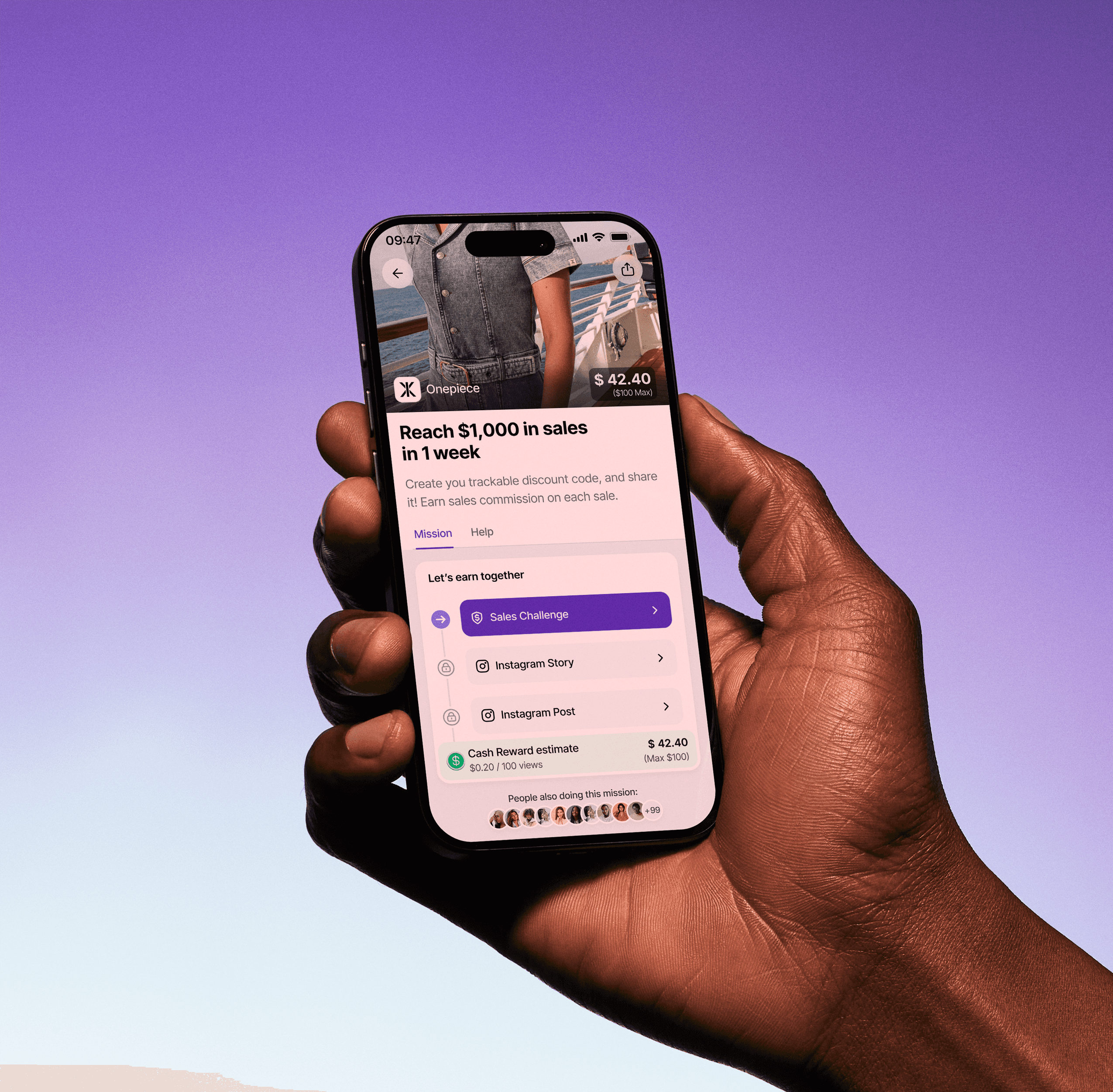
Driving Engagement Through Missions
To keep communities active after launch, brands could create missions — small campaign-based tasks that members could complete in exchange for rewards.
Users would complete a mission, submit it for approval, receive rewards, and continue into the next mission. This created a continuous engagement loop that turned community participation into repeatable behavior.
The missions became an important part of how brands activated their audience, rewarded participation, and sustained ongoing community-led growth inside Club.

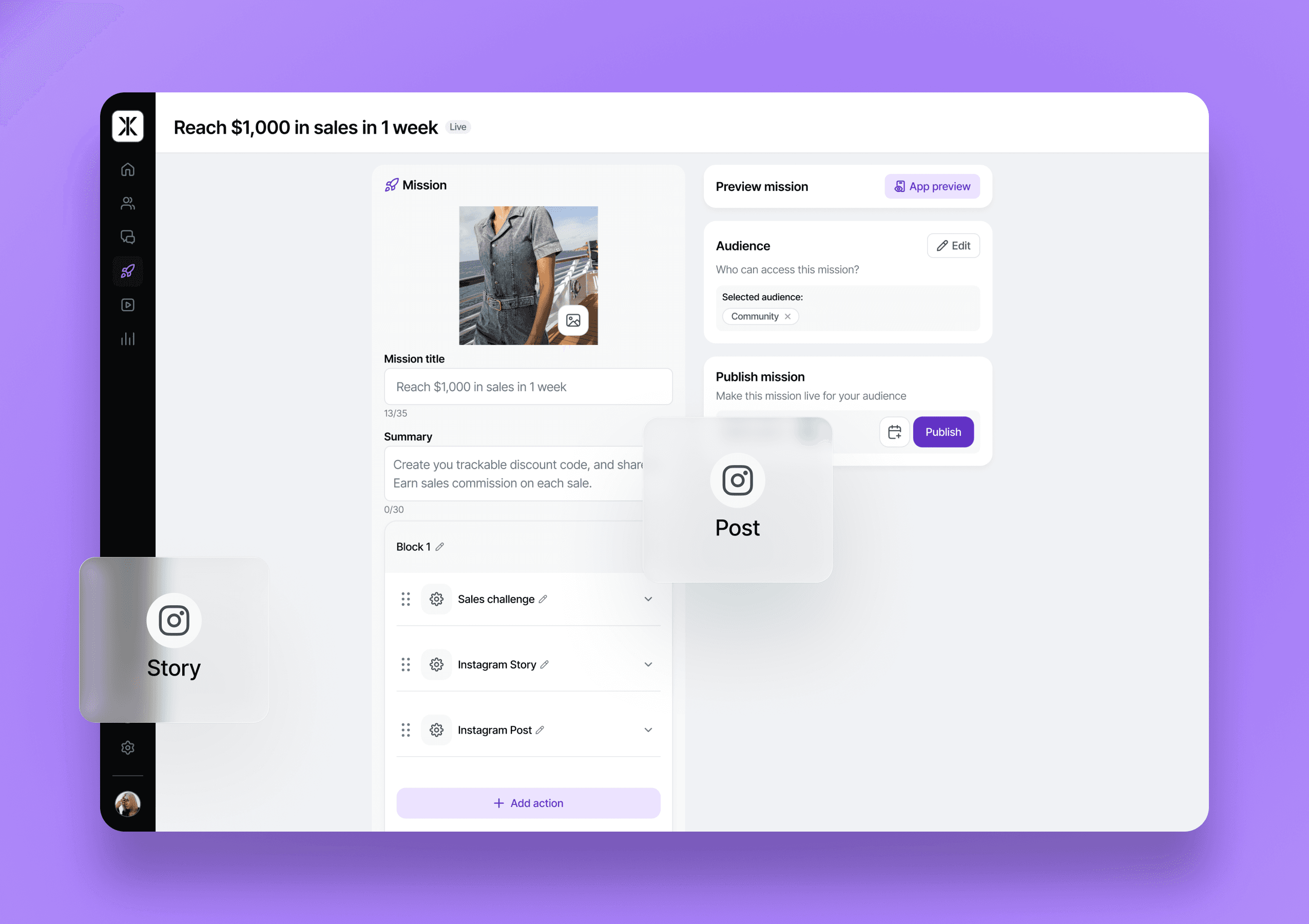
Rewards & Campaign Optimization
The platform included three reward types: cash rewards funded directly through the platform, gift card rewards powered by store credits connected to the webshop, and free product rewards selected directly from the brand’s connected e-commerce store.
An important part of the system was continuously optimizing campaigns based on performance and user behavior. If missions had low participation or completion rates, brands could adjust tasks, increase rewards, and refine campaigns to improve engagement and keep the community loop active.


Campaign Planning & Scheduling
Brands could schedule missions and plan campaigns in advance, allowing them to continuously manage future community engagement and marketing activities directly inside the platform.


Community Communication
Brands could communicate directly with members through wall posts, comments, and replies, creating a lightweight communication layer for updates, discussions, feedback, and ongoing community engagement inside Club.


Activity & Revenue Insights
The platform included dashboards for tracking revenue, rewards, affiliate performance, campaign activity, and community growth over time.
This gave brands visibility into how their missions, rewards, and engagement systems were performing, allowing them to continuously optimize campaigns and scale successful community behaviors.


User Management & Segmentation
Brands could browse individual members, view activity, submissions, socials, rewards, and content created through Club, while also organizing users into segments based on behavior, market, or community role.
This helped brands identify active contributors, manage targeted campaigns, and build more personalized community experiences.

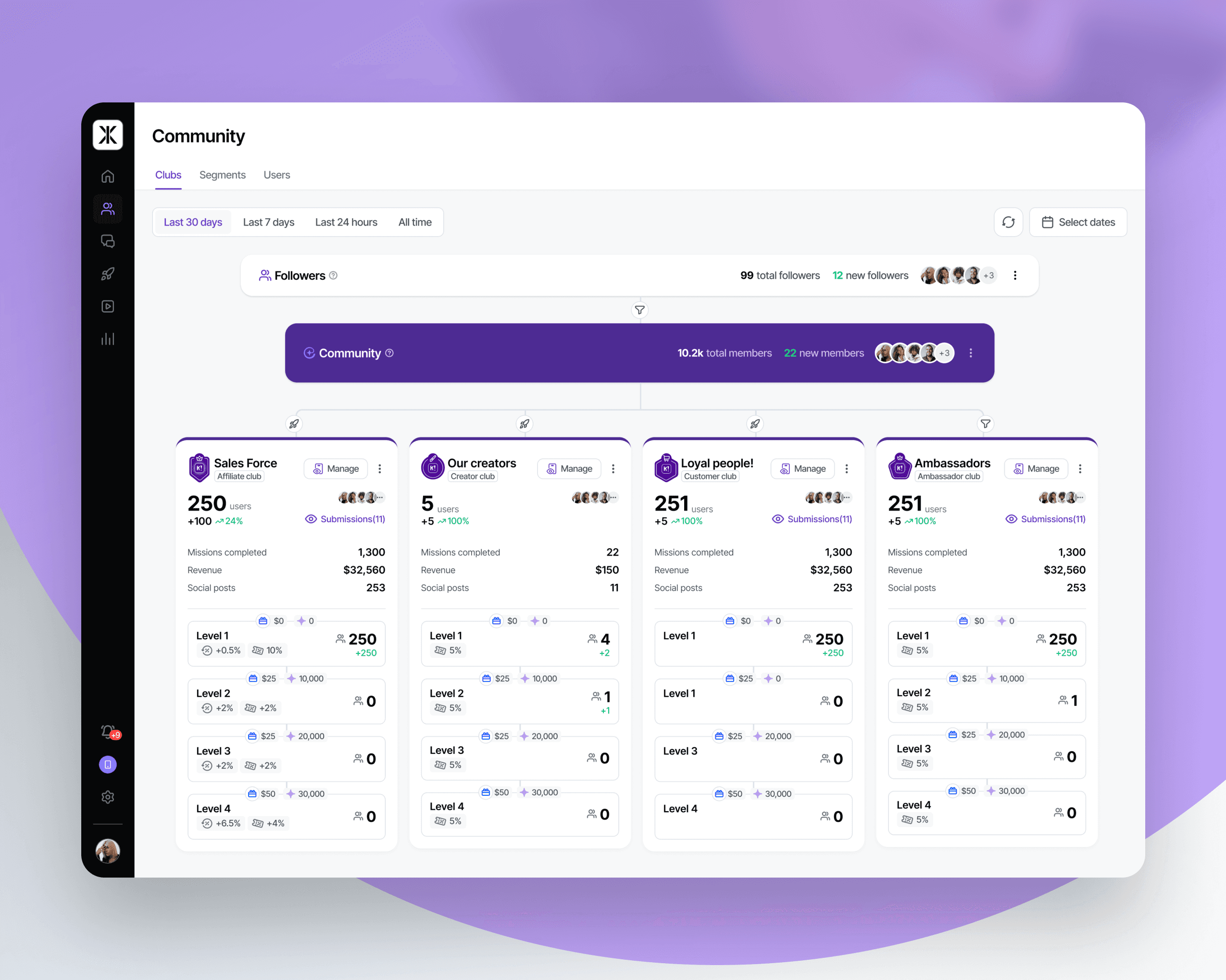
Content Library & Clubs
Brands could browse and filter all content created by their community, making it easier to discover high-performing creators and campaign submissions.
The platform also supported Clubs, allowing users to join communities based on missions, eligibility filters, or audience fit.
For a deeper breakdown of the loyalty system architecture, see the dedicated Club Loyalty Feature case study.
Impact
The platform transformed onboarding and brand setup from a technical workflow into a product experience.
Brands gained:
immediate visual feedback
stronger understanding of the platform
faster onboarding
clearer ownership of their page
Internally, Club gained:
a scalable approval workflow
better onboarding quality
stronger consistency across brand launches
Most importantly, the redesign removed the disconnect between building the experience and experiencing the product itself.

Key Insight
Traditional admin tools separate users from the product they are building.
Club Platform was designed to do the opposite — allowing brands to continuously build, manage, and grow their community while remaining inside the experience itself.


